DOC REF: KIF-GB-RPT-01 • KIPM INNOVATORS FOUNDATION

Introduction to Robotics

A Simple Training for Beginners

Date & Time
1 September 2026
11:00 AM – 1:00 PM (2 Hrs)
Venue
KIPM Technical Campus
GIDA, Gorakhpur
Target Group
Students / Beginners
No Prior Experience Required
Session Format
Hands-on + Theory
Concept + Build + MCQs
Collaborative Representation:
KIPM Innovators Foundation (KIF)GuavaBotVigyanTrixS.K.S.D. Senior Secondary School

01. Executive Summary

The Introduction to Robotics workshop was conducted on 1 September 2026 from 11:00 AM to 1:00 PM at KIPM Technical Campus, GIDA, Gorakhpur. The training was specifically designed as an accessible, beginner-friendly orientation to introduce students to the exciting world of robotics, basic components, and the principles governing autonomous machines.

The session followed a structured, progressive approach: participants were first introduced to the core definition of robotics and real-world industrial applications, followed by robot anatomy (controllers, sensors, actuators, power supplies, mechanical parts), fundamental electronics (voltage, current, resistance, Ohm’s Law, LEDs, resistors), an interactive breadboard practical build ("Make Robot Eye"), and an engaging MCQ assessment.

02. Workshop Objectives

Introduce beginners to fundamental robotics concepts and technological scope.
Explain how autonomous robotic systems operate on the Sense → Think → Act feedback cycle.
Familiarize participants with microcontrollers, sensors, motors, power supplies, and mechanical frames.
Connect robotics principles to practical industries: Healthcare, Space, Automotive, Agriculture, and Automation.
Build foundational understanding of electrical properties: Voltage (V), Current (I), Resistance (R), and Ohm's Law.
Introduce LEDs, polarity (anode/cathode), current-limiting resistors, and Arduino development boards.
Provide direct hands-on fabrication experience via the "Make Robot Eye" circuit lab.
Reinforce recall and concept mastery through an interactive multiple-choice assessment.

03. Content Covered & Learning Modules

MODULE 01
Introduction to Robotics
Definition of robotics; designing, building and programming robots; the foundational Sense → Think → Act cycle.
MODULE 02
What Makes a Machine a Robot?
Basic distinctions between passive machines and autonomous feedback-driven robotic systems with real-world examples.
MODULE 03
Building a Robot & Anatomy
The lifecycle: Design → Build → Add Electronics → Program → Test. Component breakdown: Controller, Sensors, Actuators, Power.
MODULE 04
Basic Electronics & Circuitry
Voltage, current, resistance, Ohm’s Law (V = I × R), LED polarity (anode/cathode), and current limiting resistors.
MODULE 05
Arduino & Microcontrollers
Microcontroller development boards, digital/analog pins, and Arduino C++ embedded sketch logic.
MODULE 06
Practical Lab: "Make Robot Eye"
Group-based circuit breadboarding with components, guided troubleshooting, and live testing.
MODULE 07
Assessment & Feedback
Multiple-choice knowledge check covering controllers, sensors, actuators, resistors, and Sense → Think → Act.

04. Practical Lab: "Make Robot Eye" Activity

Hands-on Breadboard Circuit Build

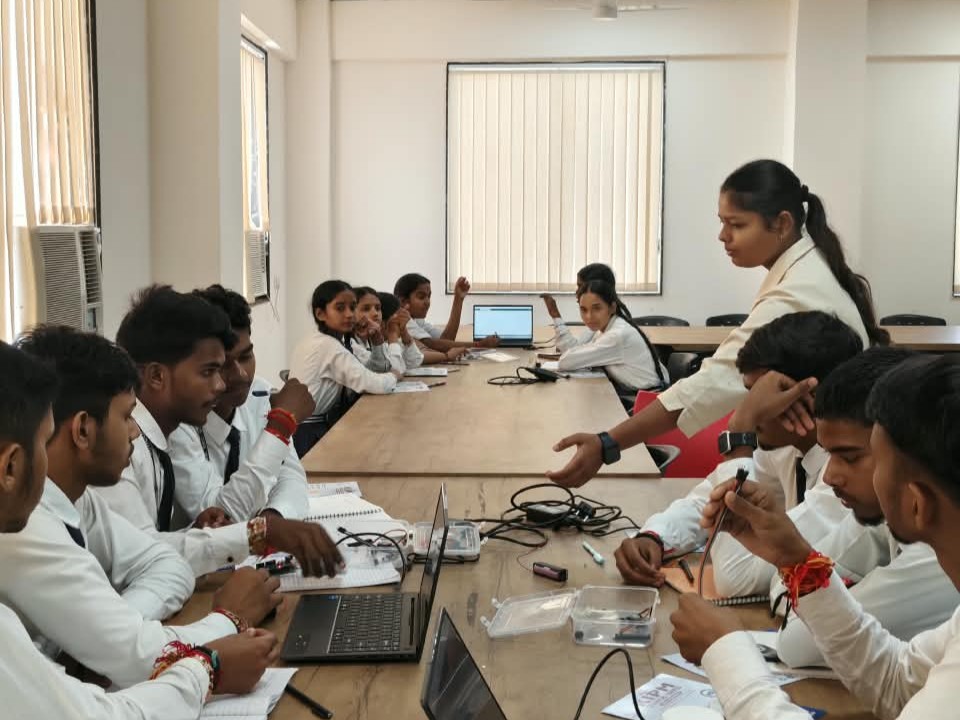
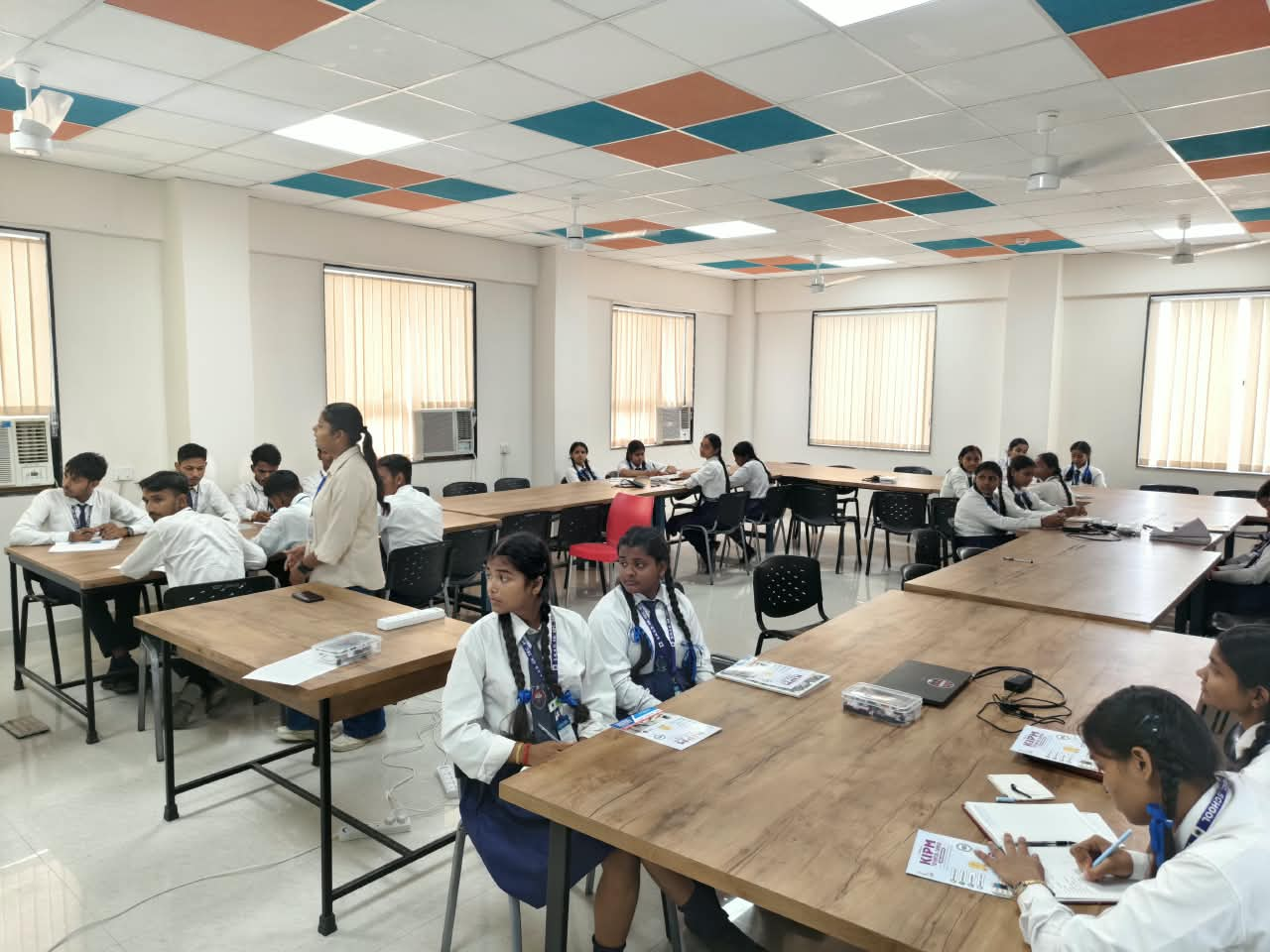
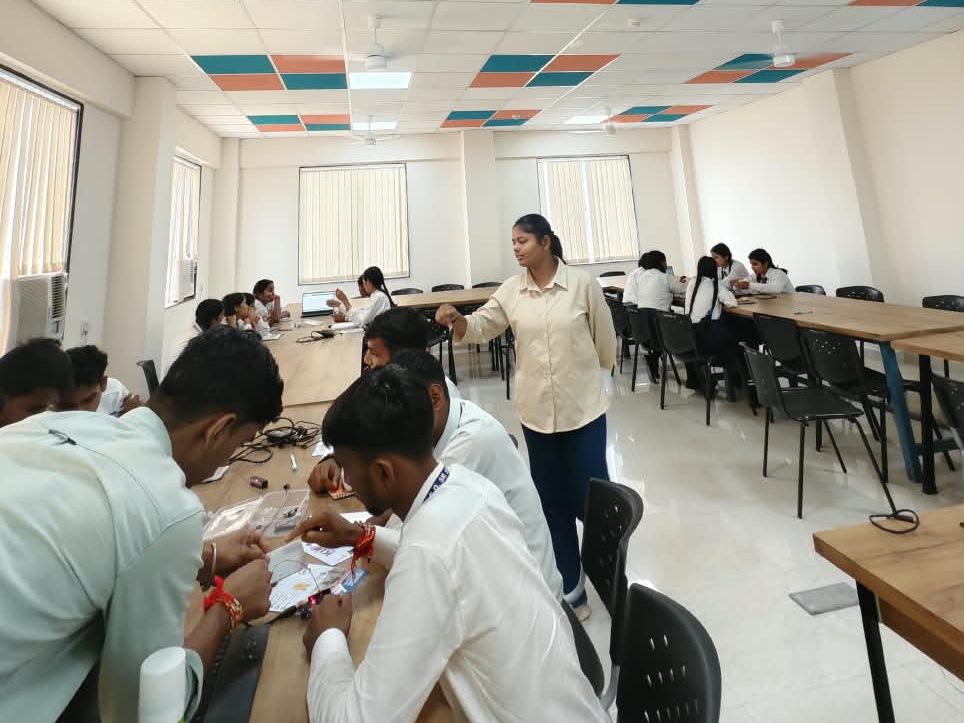
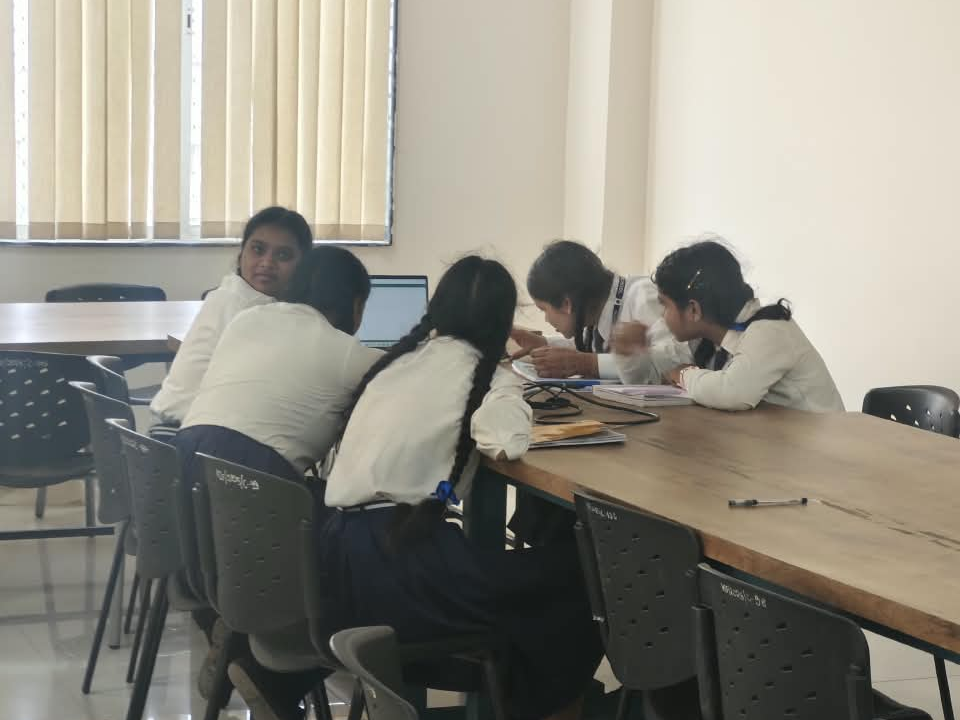
The practical portion was structured around the "Make Robot Eye" activity. Participants formed collaborative teams, received hardware component kits, and constructed functional optical indicator circuits simulating robotic eyes under the step-by-step guidance of the GuavaBot instructors.

Key Technical Insights:
  • LED Polarity: Long leg is positive (Anode), short leg is negative (Cathode).
  • Resistor Function: Limiting current draw to safeguard semiconductor components.
  • Direct bridge between theoretical circuit equations and physical hardware making.
Kit Components Used:
  • Arduino Development Board
  • Solderless Half-size Breadboard
  • High-efficiency 5mm LEDs (Red / Green)
  • 220Ω Current Limiting Resistors
  • Male-to-Male Flexible Jumper Wires
  • Regulated 5V Power Rails

05. Participant Feedback & Metrics

06. Photographic Evidence & Lab Records

5 Records

07. Conclusion

The Introduction to Robotics workshop provided a structured beginner-level introduction to robotics, combining conceptual learning with practical exposure. The content progressed from basic definitions and applications to robot components, electronics fundamentals, Arduino, and a hands-on activity. The inclusion of MCQs added an interactive knowledge-check component.

— End of Formal Report (KIPM Technical Campus, Gorakhpur) —