DOC REF: GB-RPT-03 • KIPM INNOVATOR FOUNDATION

Introduction to Robotics

Event Report for R. B. Memorial Public School

Date & Time
22 September 2026
11:00 AM – 1:00 PM (2 Hrs)
Venue
KIPM Technical Campus
GIDA, Gorakhpur
Participants
21 Students
R. B. Memorial Public School
Format
Concept Learning
Hands-on Activity & Knowledge Check
Organized By:
GuavaBot Pvt. Ltd.KIFR. B. Memorial Public School

01. Executive Summary

The Introduction to Robotics workshop was conducted for students of R. B. Memorial Public School on 22 September 2026 from 11:00 AM to 1:00 PM at KIPM Technical Campus, GIDA, Gorakhpur. The session was designed as a beginner-friendly introduction to robotics, covering the meaning of robotics, real-world applications, robot anatomy, basic electronic concepts, Arduino and practical circuit-based learning.

A total of 21 students participated in the session. The training followed a progressive approach: concepts were introduced first, followed by demonstrations, component familiarisation and a hands-on “Make Robot Eye” activity under trainer guidance. The session also included interactive questions to reinforce learning.

02. Objectives of the Workshop

Introduce beginners to the fundamental concept and scope of robotics.
Explain the basic Sense → Think → Act cycle used to understand robotic systems.
Familiarise students with controllers, sensors, actuators/motors, power supplies and mechanical parts.
Connect robotics concepts with real-life applications in education, healthcare, automotive, agriculture, mobile/service systems and space/exploration.
Build foundational understanding of voltage, current, resistance and Ohm’s Law.
Provide hands-on learning through the “Make Robot Eye” activity.

03. Content Covered & Session Flow

MODULE 01
Introduction to Robotics
Definition of robotics; designing, building and programming robots; Sense → Think → Act.
MODULE 02
Building a Robot & History
Design → Build → Add Electronics → Program → Test → Final Robot. Key milestones from early concepts to modern robots.
MODULE 03
Robot Anatomy & Types
Industrial, medical, mobile, service, agriculture and humanoid robotics. Controllers, sensors, actuators, power supplies.
MODULE 04
Basic Electronics & Arduino
Voltage, current, resistance and Ohm’s Law. LED polarity and the role of a resistor. Development-board concepts.
MODULE 05
Practical Activity: "Make Robot Eye"
Group-based hands-on activity with electronic components and trainer guidance.
MODULE 06
Knowledge Check
Interactive questions covering controllers, sensors, actuators, resistors and Sense → Think → Act.

04. Learning Outcomes & Practical Component

Learning Outcomes

  • Students developed a basic understanding of what robotics is and how robots operate.
  • Students were introduced to the Sense → Think → Act model of robotic operation.
  • Participants learned the roles of sensors, controllers and actuators/motors.
  • Students gained introductory knowledge of voltage, current, resistance and Ohm’s Law.
  • Participants were introduced to Arduino and basic circuit construction.

Practical / Activity Component

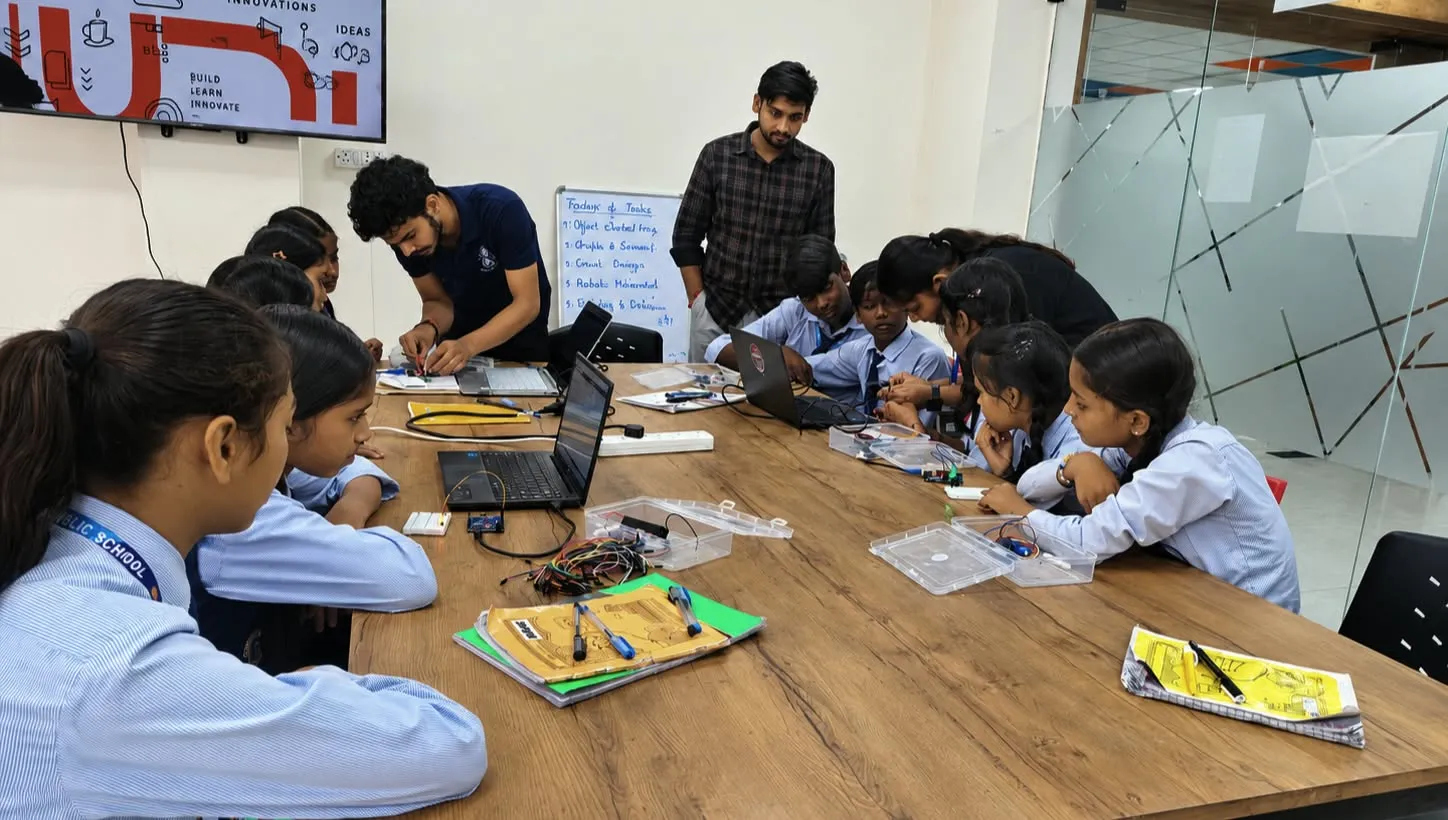
  • Focused on a group-based “Make Robot Eye” activity.
  • Students worked with electronic components under trainer guidance, connecting circuits, LEDs, and resistors.
  • Basic Arduino LED circuit was introduced, explaining LED polarity (anode/cathode).
  • Encouraged teamwork, component identification, and hands-on problem solving.

05. Student Feedback & Satisfaction

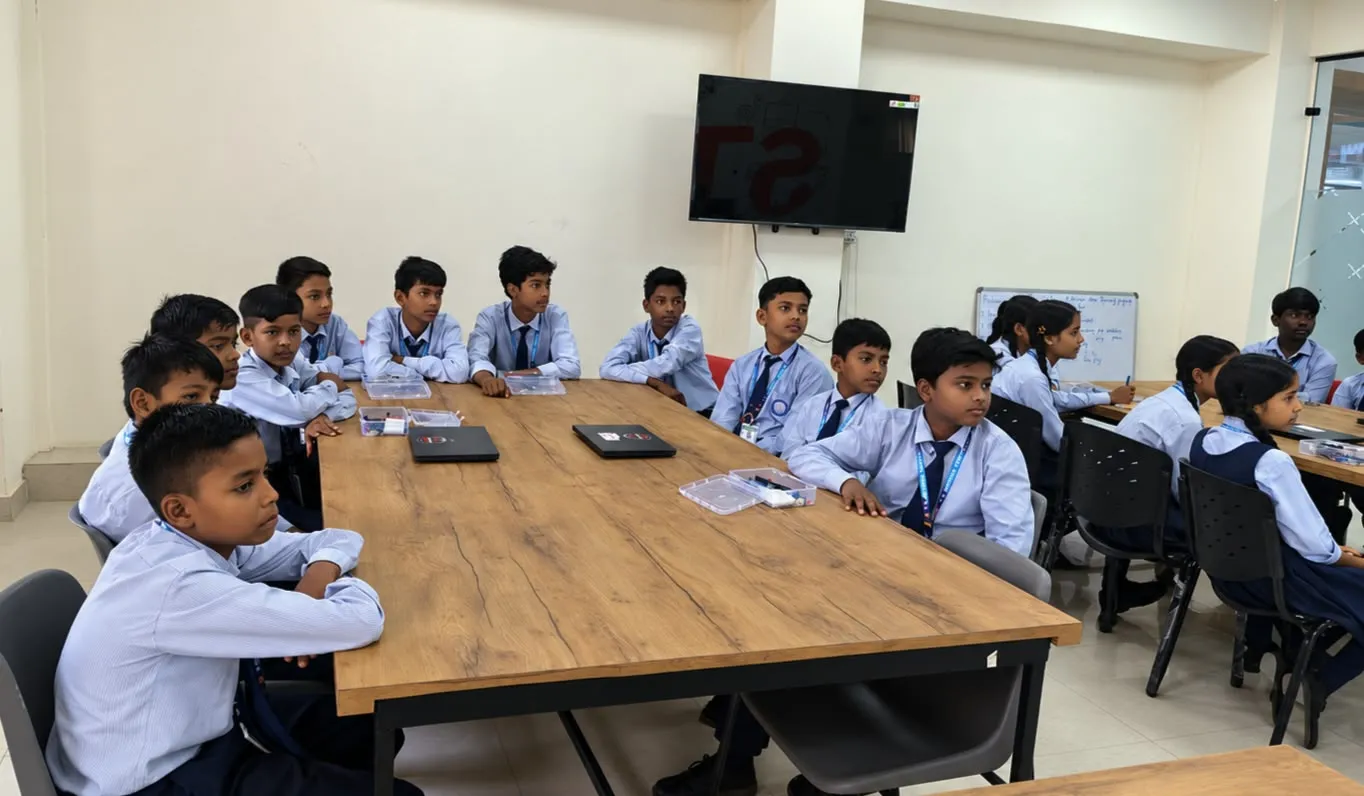
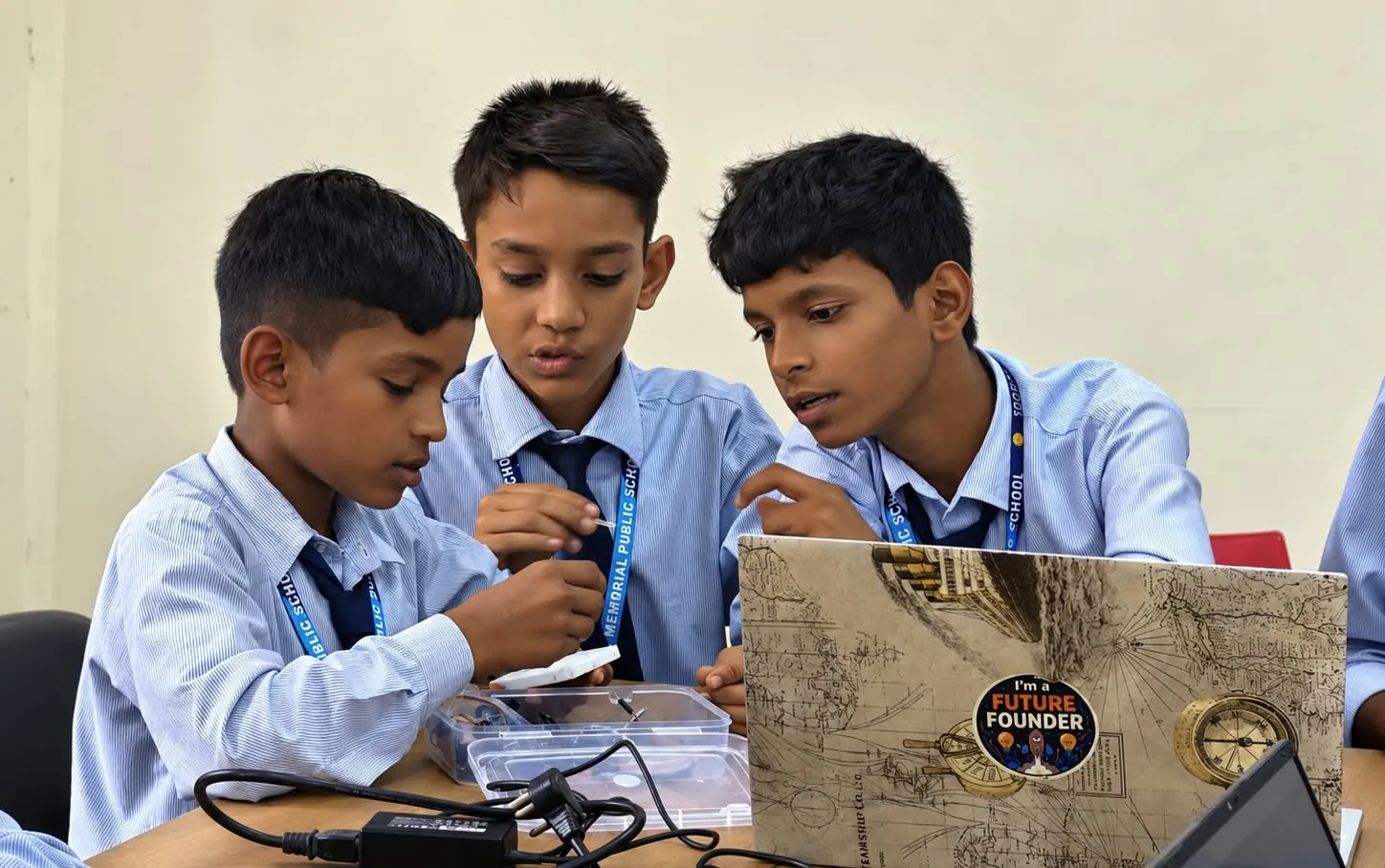
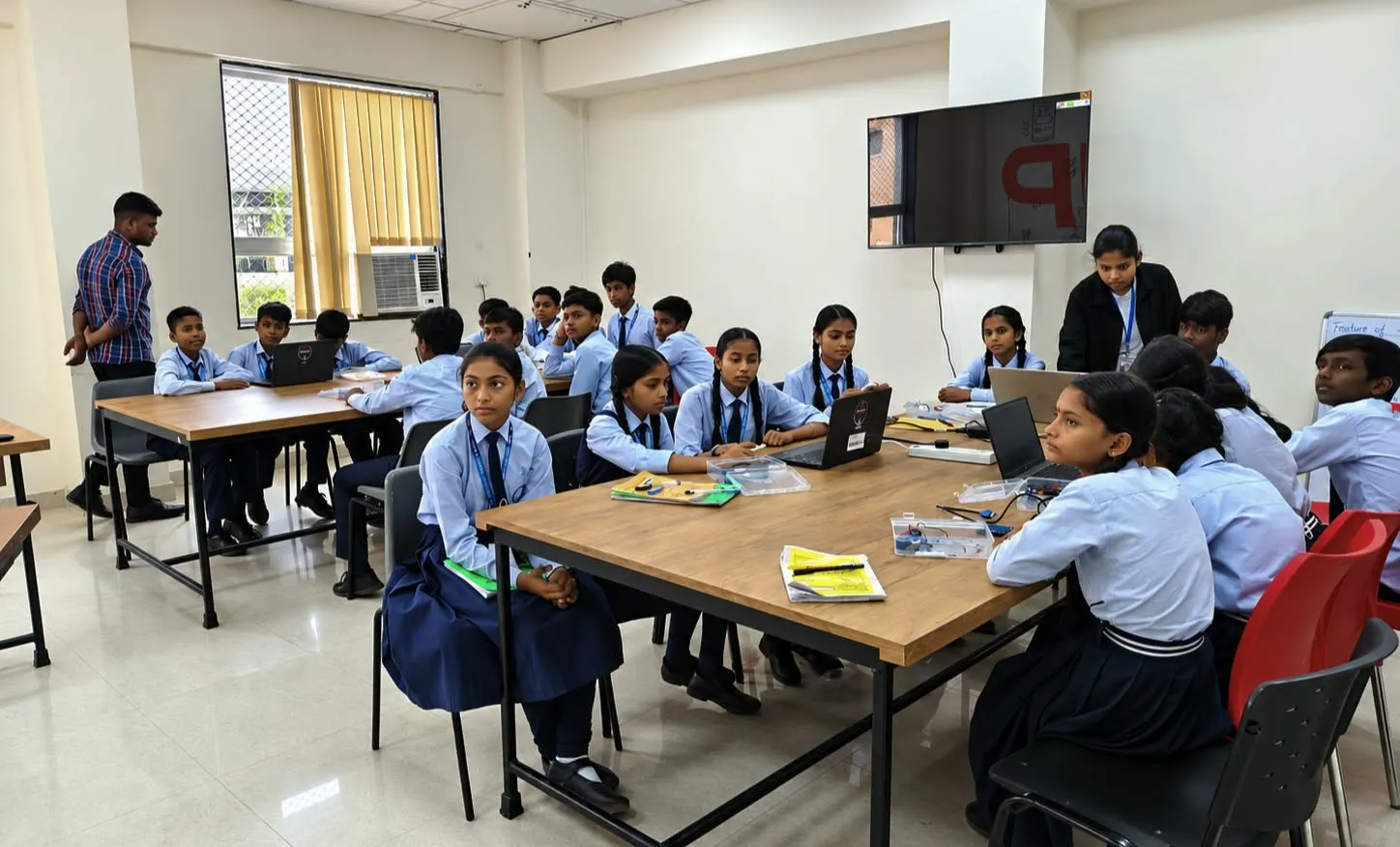
06. Photographic Documentation

4 Records

07. Conclusion & Acknowledgement

The Introduction to Robotics workshop at R. B. Memorial Public School provided a structured, beginner-level introduction to robotics by combining conceptual learning with practical exposure. The session progressed from basic definitions and applications to robot components, electronics fundamentals, Arduino and a hands-on activity.

With 21 students participating, the programme created an opportunity for students to observe, discuss, build and experiment with basic robotic and electronic concepts. The activity-oriented format was intended to strengthen curiosity, teamwork and confidence in exploring robotics and STEM-based learning.

Acknowledgement: We sincerely thank the management and teachers of R. B. Memorial Public School for their cooperation, and the participating students for their active involvement. We also acknowledge the support of KIPM Innovator Foundation and GuavaBot in facilitating the robotics learning initiative.

— Prepared By: Robotics & STEM Education Team, GuavaBot Pvt. Ltd. —